

JAKAFI® or JAKAFI XR™ (ruxolitinib) is a prescription medication used to treat adults with certain types of myelofibrosis (MF). It is not known if JAKAFI or JAKAFI XR is safe or effective in children for treatment of myelofibrosis.
Myelofibrosis (my-ah-lo-fye-BRO-sis), or MF, is a rare, chronic blood cancer that affects the bone marrow and the production of blood cells. The bone marrow is the material inside the bone where blood cells are made. People with MF typically have:
Bone marrow is where blood cells are made. As scar tissue builds up, the bone marrow can’t make enough blood cells. The spleen, which is an organ near the stomach under the left ribs, partially takes over making blood cells. This may make the spleen get bigger, a condition called splenomegaly (splee-nuh-MEG-uh-lee).
Breaking down myelofibrosis:
myelo = bone marrow | fibrosis = scarring
Breaking down splenomegaly:
spleno = of the spleen | megaly = bigger than normal
Breaking down myelofibrosis:
myelo = bone marrow
fibrosis = scarring
Breaking down splenomegaly:
spleno = of the spleen
megaly = bigger than normal

People are usually around 65 years old when they learn they have MF

About 16,000 to 18,500 people in the United States have MF
It’s important to understand how MF can affect your body over time. In its very early stages, the disease may be silent. You might not experience symptoms even though the disease may be progressing. As the disease gets worse, its signs and symptoms start to increase.

There are many things that can affect the course—or progression—of your MF. Researchers evaluate patients based upon these risk factors.
MF is a complex condition that may have many contributing factors. We do know that certain proteins called Janus-associated kinases, or JAKs, are important. JAKs tell blood cells in the bone marrow to divide and grow.
When JAKs are working normally, they help the body make the right number of blood cells. But when JAKs aren’t working normally, they cause the body to make the wrong number of blood cells. They can also cause bone marrow scarring, an enlarged spleen, and symptoms.
MF can develop from other myeloproliferative neoplasms
MF is a chronic bone marrow condition that is part of a group of diseases called myeloproliferative neoplasms (MY-ah-lo-pro-LIF-er-uh-tiv NEE-o-plaz-uhms), or MPNs. If MF is a person’s first MPN, then it is called primary myelofibrosis.
Mutations, or changes, in genes are thought to be ultimately responsible for MF. The mutations may be in the genes that make JAKs, or the mutations may be in genes that affect how JAKs function. In either case, the mutations cause what is known as overactive JAK signaling.
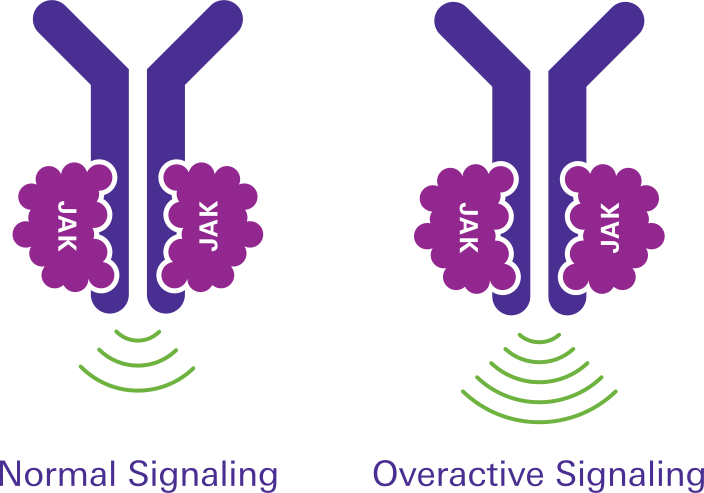
MF is a complex condition that may have many contributing factors. We do know that certain proteins called Janus-associated kinases, or JAKs, are important. JAKs tell blood cells in the bone marrow to divide and grow.
When JAKs are working normally, they help the body make the right number of blood cells. But when JAKs aren’t working normally, they cause the body to make the wrong number of blood cells. They can also cause bone marrow scarring, an enlarged spleen, and symptoms.
Mutations, or changes, in genes are thought to be ultimately responsible for MF. The mutations may be in the genes that make JAKs, or the mutations may be in genes that affect how JAKs function. In either case, the mutations cause what is known as overactive JAK signaling.

Normal Signaling

Overactive Signaling
MF can develop from other myeloproliferative neoplasms
MF is a chronic bone marrow condition that is part of a group of diseases called myeloproliferative neoplasms (MY-ah-lo-pro-LIF-er-uh-tiv NEE-o-plaz-uhms), or MPNs. If MF is a person’s first MPN, then it is called primary myelofibrosis.
In other cases, another MPN, like polycythemia vera (PV) or essential thrombocythemia (ET), can turn into MF. These conditions are called post–PV MF and post–ET MF. About 10-15% of patients with MF have these conditions.
Symptoms of MF can range from mild to severe. They may be caused by an enlarged spleen or by production of too many cytokines, proteins that cause inflammation.
As discussed previously, if your bone marrow is not making enough blood cells (or making them too quickly so that they don’t have time to fully form), your spleen can take over and begin to make blood cells. This may make your spleen get bigger.
Symptoms of an enlarged spleen include:

In one clinical study, about 90% of people living with MF had an enlarged spleen when they were diagnosed.
Symptoms caused by overproduction of cytokines in the body include:

Approximately 50% to 60% of people with MF report having itching, night sweats, and bone pain.
An enlarged spleen is a common finding in people with MF.
Patient Perspectives: Mayra’s Story

Mayra thought her MF symptoms were just a part of getting older. Learn how she discovered what was possible with Jakafi.
An important goal of MF treatment is to reduce your symptoms. That’s why keeping track of your condition over time can be so important. People living with MF may get used to their symptoms, so it’s important to keep track of your health on a regular basis so that you can more easily identify when something has changed. An enlarged spleen may cause some of the spleen-related symptoms mentioned above. It’s important to share these (and any other) symptoms with your Healthcare Professional. He or she can help you document and keep track of spleen size by evaluating your spleen on a regular basis, throughout your MF journey.
In addition to monitoring symptoms, you may also want to keep track of key blood cell counts and medical procedures, such as blood transfusions. If you recognize any changes in your symptoms, blood count levels, or the frequency of blood transfusions, be sure to discuss them with your Healthcare Professional.
Your Healthcare Professional will work with you to make a plan that is right for you. One option is Jakafi® (ruxolitinib). It is the first prescription medicine approved by the FDA to treat adults with intermediate or high-risk MF.

JAKAFI or JAKAFI XR (ruxolitinib) is a prescription medication used to treat adults with certain types of myelofibrosis (MF).
It is not known if JAKAFI or JAKAFI XR is safe or effective in children for treatment of myelofibrosis.
JAKAFI or JAKAFI XR is a prescription medication used to treat adults with polycythemia vera (PV) who have already taken a medicine called hydroxyurea and it did not work well enough or they could not tolerate it.
It is not known if JAKAFI or JAKAFI XR is safe or effective in children for treatment of polycythemia vera.
JAKAFI or JAKAFI XR is a prescription medication used to treat adults and children 12 years of age and older with acute graft-versus-host disease (GVHD) who have taken corticosteroids and they did not work well enough.
JAKAFI or JAKAFI XR is a prescription medication used to treat adults and children 12 years of age and older with chronic graft-versus-host disease (GVHD) who have taken one or two types of treatments and they did not work well enough.
JAKAFI or JAKAFI XR can cause serious side effects, including:
Low blood counts: JAKAFI or JAKAFI XR may cause low platelet, red blood cell, and white blood cell counts. If you develop bleeding, stop taking JAKAFI or JAKAFI XR and call your healthcare provider. Your healthcare provider will do a blood test to check your blood counts before you start and regularly during your treatment. Your healthcare provider may change your dose or stop your treatment based on the results of your blood tests.
Tell your healthcare provider right away if you develop or have worsening symptoms such as
Infection: You may be at risk for developing a serious infection during treatment with JAKAFI or JAKAFI XR. Tell your healthcare provider if you develop any of the following symptoms of infection:
Worsening of symptoms after interrupting or stopping treatment. Signs and symptoms of myelofibrosis may worsen after you stop treatment.
Do not interrupt or stop treatment without talking to your healthcare provider. Tell your healthcare provider right away if you have any of the following after stopping treatment:
Cancer: Some people have had certain types of non-melanoma skin cancers during treatment with JAKAFI or JAKAFI XR. Your healthcare provider will regularly check your skin during your treatment. Tell your healthcare provider if you develop any new or changing skin lesions during treatment.
Increases in cholesterol: You may have changes in your blood cholesterol levels during treatment with JAKAFI or JAKAFI XR. Your healthcare provider will do blood tests to check your cholesterol levels about every 8 to 12 weeks after you start taking JAKAFI or JAKAFI XR and as needed.
Increased risk of major cardiovascular events such as heart attack, stroke or death in people who have cardiovascular risk factors and who are current or past smokers while using another JAK inhibitor to treat rheumatoid arthritis:
Get emergency help right away if you get any symptoms of a heart attack or stroke during treatment with JAKAFI or JAKAFI XR, including:
Increased risk of blood clots: Blood clots in the veins of your legs (deep vein thrombosis, DVT) or lungs (pulmonary embolism, PE) have happened in people taking another JAK inhibitor for rheumatoid arthritis and may be life-threatening.
Tell your healthcare provider right away if you have any signs and symptoms of blood clots during treatment with JAKAFI or JAKAFI XR, including:
Possible increased risk of new (secondary) cancers: People who take another JAK inhibitor for rheumatoid arthritis have an increased risk of new (secondary) cancers, including lymphoma and other cancers. People who smoke or who smoked in the past have an added risk of new cancers.
The most common side effects of JAKAFI or JAKAFI XR include:
These are not all the possible side effects. Ask your pharmacist or healthcare provider for more information. Call your doctor for medical advice about side effects.
Before taking JAKAFI or JAKAFI XR, tell your healthcare provider about:
Women should not take JAKAFI or JAKAFI XR while pregnant or planning to become pregnant. Do not breastfeed during treatment with JAKAFI or JAKAFI XR and for 2 weeks after the final dose.
How should I take JAKAFI or JAKAFI XR?
Please see the Full Prescribing Information, including Patient Information, which includes a more complete discussion of the risks associated with JAKAFI or JAKAFI XR.
You are encouraged to report negative side effects of prescription drugs to the FDA. Visit www.fda.gov/medwatch, or call 1-800-FDA-1088.
You may also report side effects to Incyte Medical Information at 1-855-463-3463.



Thank you for visiting.
You are now leaving the Jakafi.com website. This link will take you to a site that is not owned or maintained by Incyte Corporation, and Incyte is not responsible for the information contained on third-party sites.

