Important Safety Information
JAKAFI or JAKAFI XR can cause serious side effects, including:
Low blood counts: JAKAFI or JAKAFI XR may cause low platelet, red blood cell, and white blood cell counts. If you develop bleeding, stop taking JAKAFI or JAKAFI XR and call your healthcare provider. Your healthcare provider will do a blood test to check your blood counts before you start and regularly during your treatment. Your healthcare provider may change your dose or stop your treatment based on the results of your blood tests.
Tell your healthcare provider right away if you develop or have worsening symptoms such as
- unusual bleeding
- bruising
- tiredness
- shortness of breath
- a fever
Infection: You may be at risk for developing a serious infection during treatment with JAKAFI or JAKAFI XR. Tell your healthcare provider if you develop any of the following symptoms of infection:
- chills
- nausea
- vomiting
- aches
- weakness
- fever
- painful skin rash or blisters
Worsening of symptoms after interrupting or stopping treatment. Signs and symptoms of myelofibrosis may worsen after you stop treatment.
Do not interrupt or stop treatment without talking to your healthcare provider. Tell your healthcare provider right away if you have any of the following after stopping treatment:
- fever
- trouble breathing
- weakness
- night sweats
- feeling dizzy or lightheaded
- pain in left upper stomach area or left shoulder
Cancer: Some people have had certain types of non-melanoma skin cancers during treatment with JAKAFI or JAKAFI XR. Your healthcare provider will regularly check your skin during your treatment. Tell your healthcare provider if you develop any new or changing skin lesions during treatment.
Increases in cholesterol: You may have changes in your blood cholesterol levels during treatment with JAKAFI or JAKAFI XR. Your healthcare provider will do blood tests to check your cholesterol levels about every 8 to 12 weeks after you start taking JAKAFI or JAKAFI XR and as needed.
Increased risk of major cardiovascular events such as heart attack, stroke or death in people who have cardiovascular risk factors and who are current or past smokers while using another JAK inhibitor to treat rheumatoid arthritis:
Get emergency help right away if you get any symptoms of a heart attack or stroke during treatment with JAKAFI or JAKAFI XR, including:
- discomfort in the center of your chest that lasts for more than a few minutes or that goes away and comes back
- severe tightness, pain, pressure, or heaviness in your chest, throat, neck, or jaw
- pain or discomfort in your arms, back, neck, jaw, or stomach
- shortness of breath with or without chest discomfort
- breaking out in a cold sweat
- nausea or vomiting
- feeling lightheaded
- weakness in one part or on one side of your body
- slurred speech
Increased risk of blood clots: Blood clots in the veins of your legs (deep vein thrombosis, DVT) or lungs (pulmonary embolism, PE) have happened in people taking another JAK inhibitor for rheumatoid arthritis and may be life-threatening.
Tell your healthcare provider right away if you have any signs and symptoms of blood clots during treatment with JAKAFI or JAKAFI XR, including:
- swelling, pain, or tenderness in one or both legs
- sudden, unexplained chest or upper back pain
- shortness of breath or difficulty breathing
Possible increased risk of new (secondary) cancers: People who take another JAK inhibitor for rheumatoid arthritis have an increased risk of new (secondary) cancers, including lymphoma and other cancers. People who smoke or who smoked in the past have an added risk of new cancers.
The most common side effects of JAKAFI or JAKAFI XR include:
- for certain types of myelofibrosis (MF) – low platelet or red blood cell counts, bruising, dizziness, headache, and diarrhea
- for certain types of polycythemia vera (PV) – low platelet or red blood cell counts, bruising, dizziness, headache, and diarrhea
- for acute GVHD – low platelet counts, low red or white blood cell counts, infections, and swelling
- for chronic GVHD – low red blood cell or platelet counts and infections, including viral infections
These are not all the possible side effects. Ask your pharmacist or healthcare provider for more information. Call your doctor for medical advice about side effects.
Before taking JAKAFI or JAKAFI XR, tell your healthcare provider about:
- all the medications, vitamins, and herbal supplements you are taking
- your medical conditions, including if you
- have or had low white or red blood cell counts
- have an infection
- have or had tuberculosis (TB) or have been in close contact with someone who has TB
- had shingles (herpes zoster)
- have or had hepatitis B
- have a high level of fat in your blood (high blood cholesterol or triglycerides)
- have or have had a blood clot, heart attack, other heart problems, or stroke
- are a current or past smoker
- had cancer
- have or had liver or kidney problems or are on dialysis. If you are on dialysis, JAKAFI or JAKAFI XR should be taken after your dialysis
- have any other medical condition
Women should not take JAKAFI or JAKAFI XR while pregnant or planning to become pregnant. Do not breastfeed during treatment with JAKAFI or JAKAFI XR and for 2 weeks after the final dose.
How should I take JAKAFI or JAKAFI XR?
- Take exactly as your healthcare provider tells you.
- Do not change your dose or stop taking JAKAFI or JAKAFI XR without first talking to your healthcare provider. If you stop treatment, symptoms of your condition may return.
- If you miss a dose, take your next dose at your regular time. Do NOT take 2 doses at the same time.
- You may have regular blood tests during your treatment. Based on the results, your healthcare provider may change your dose or stop JAKAFI or JAKAFI XR.
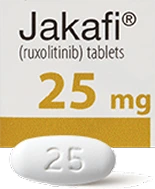
- IF YOU ARE PRESCRIBED JAKAFI:
- Take JAKAFI 2 times a day or exactly as your healthcare provider tells you, with or without food.
- JAKAFI may also be given through certain nasogastric tubes.
- Tell your healthcare provider if you cannot take JAKAFI by mouth. Your healthcare provider will decide if you can take JAKAFI through a nasogastric tube. Ask your healthcare provider to give you specific instructions on how to properly take JAKAFI through a nasogastric tube.
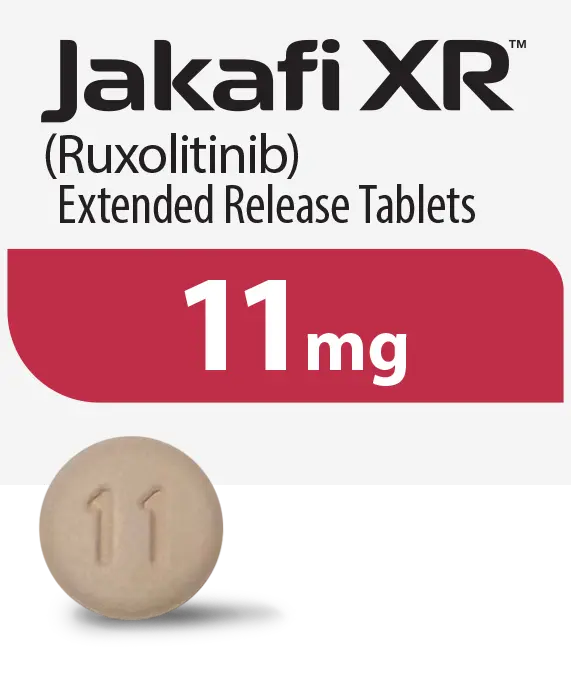
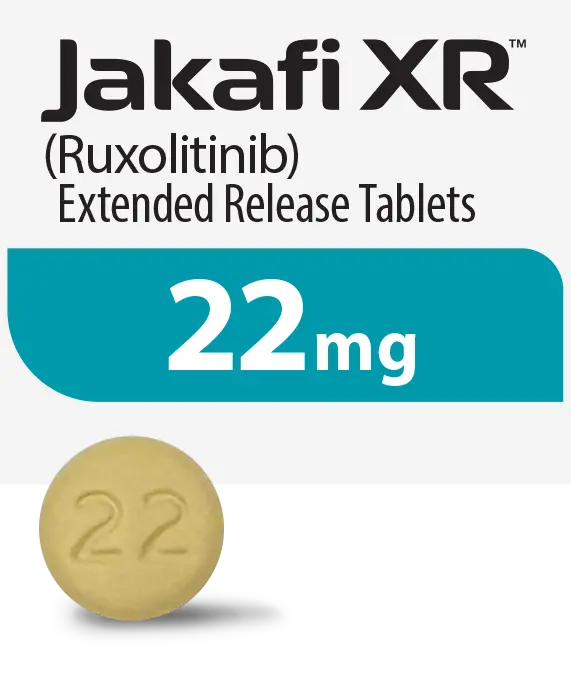
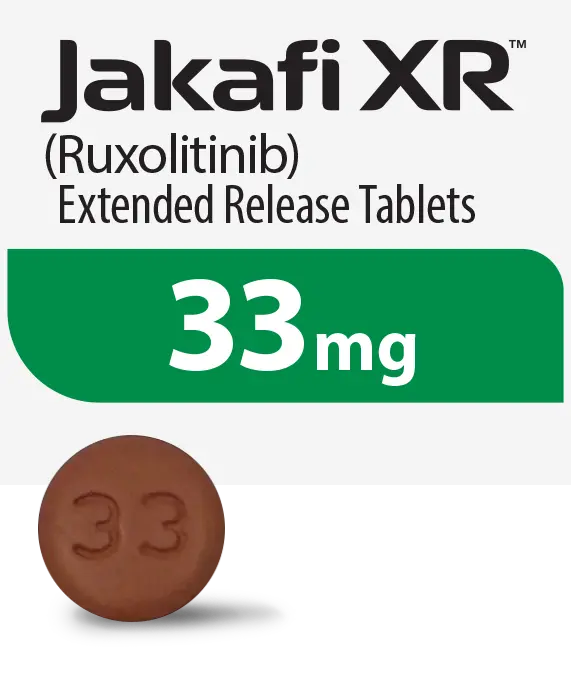
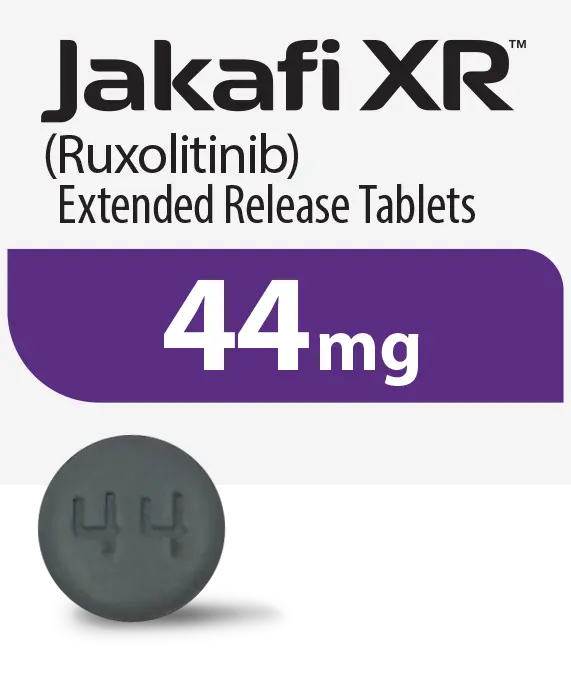
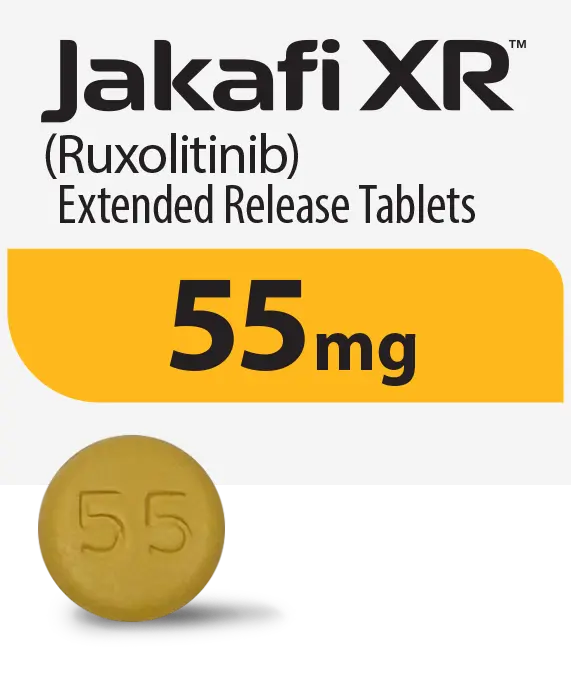
- IF YOU ARE PRESCRIBED JAKAFI XR:
- Take JAKAFI XR 1 time a day with or without food.
- Swallow JAKAFI XR whole. Do not split, crush, or chew.
Please see the Full Prescribing Information, including Patient Information, which includes a more complete discussion of the risks associated with JAKAFI or JAKAFI XR.
You are encouraged to report negative side effects of prescription drugs to the FDA. Visit www.fda.gov/medwatch, or call 1-800-FDA-1088.
You may also report side effects to Incyte Medical Information at 1-855-463-3463.